

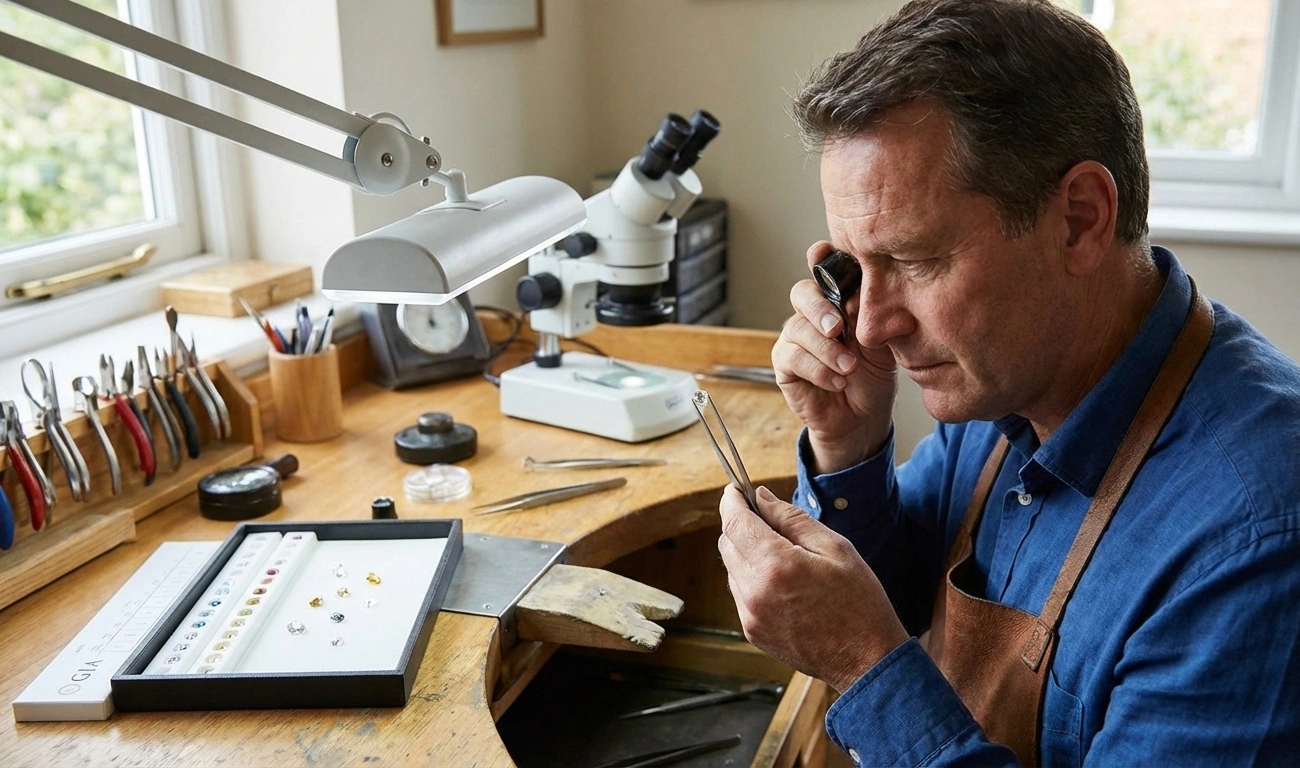
If you’ve ever shopped for a diamond, you’ve probably been told to focus on the grading report. Cut, colour, clarity and carat weight are presented as the ultimate checklist. And to be fair, grading reports are essential. They create a shared language and provide confidence that a diamond has been independently assessed.
But here’s the inside truth most jewellers won’t spell out unless you ask.
A grading report only tells part of the story.
Experienced jewellers see things that never appear on paper. Subtle traits, visual cues and performance characteristics that separate an average diamond from an exceptional one. These details are why two diamonds with identical grades can look wildly different in real life and why seasoned professionals always insist on seeing a stone in person.
Let’s step behind the loupe and uncover what jewellers actually look for that no grading report can capture.
Why a Grading Report Is Only the Starting Point
Grading reports are designed to be objective and repeatable. They categorise diamonds into ranges and tolerances. That makes them incredibly useful for comparison, but it also means they can’t fully describe beauty.
Two diamonds can both be graded G colour, VS2 clarity and Excellent cut, yet one will sparkle noticeably more. One might appear warmer, another crisper. One might feel lifeless despite perfect credentials.
This is where jewellers rely on trained eyes and experience rather than numbers.
Light Performance: The Real Measure of Sparkle
How a Diamond Handles Light
A grading report may list cut grade, proportions and angles, but it doesn’t show how light actually behaves inside the stone.
Jewellers look for:
- Brightness across the entire surface
- Crisp flashes rather than dull glow
- Balanced contrast that gives sparkle definition
A diamond with great light performance looks alive even in low light. It doesn’t go dark when tilted and doesn’t rely on spotlights to impress.
Dead Zones and Light Leakage
Some diamonds leak light through the bottom or sides. On paper, they still qualify as an Excellent cut. In reality, parts of the diamond may appear dark or glassy.
Jewellers rotate the stone slowly, watching for dead patches that never light up. Once you see this difference, you can’t unsee it.
Optical Precision and Patterning
Symmetry That Goes Beyond the Grade
Grading reports assess symmetry within acceptable tolerances. Jewellers go further.
They look for:
- Even facet patterning
- Consistent arrow shapes in round diamonds
- Visual balance rather than technical pass marks
A diamond can score Excellent symmetry and still have uneven visual patterning. True optical precision creates a sharp, almost hypnotic pattern that enhances sparkle.
Hearts and Arrows Isn’t Just a Marketing Term
Well-cut diamonds show precise internal symmetry when viewed through specialised tools. While not every beautiful diamond is hearts and arrows, jewellers often use this as a benchmark for craftsmanship.
It’s a level of refinement no standard report explains in detail.
Colour Nuances the Human Eye Notices Instantly
Where Colour Actually Shows Up
Colour grades are assigned face down under controlled lighting. Real life isn’t controlled.
Jewellers examine diamonds face up, from the side and in everyday lighting. They notice:
- Warmth along the edges
- Tint concentration near the culet
- How colour interacts with brilliance
Two diamonds with the same colour grade can appear very different once set.
How Cut Masks or Exposes Colour
A beautifully cut diamond can appear whiter than its grade suggests because strong light return masks body colour. A poorly cut diamond does the opposite.
This interaction never appears on a grading report but matters hugely in the real world
Clarity Characteristics That Matter and Ones That Don’t
Not All Inclusions Are Equal
A VS2 diamond might contain a tiny feather near the edge. Another might have a dark crystal right under the table.
On paper, same grade. In reality, very different stones.
Jewellers evaluate:
- Inclusion type
- Location
- Colour and reflectivity
- Visibility without magnification
A well-placed inclusion can be completely invisible. A poorly placed one can catch the eye immediately.
Durability Concerns Rarely Explained
Certain inclusions pose long-term durability risks. Surface-reaching feathers or internal stress lines may never affect grading but raise red flags for jewellers.
This is especially important for engagement rings designed for daily wear.
Fluorescence: How It Actually Behaves
When Fluorescence Is a Bonus
Fluorescence often gets a bad reputation. In reality, faint to medium blue fluorescence can improve face-up whiteness in some diamonds.
Jewellers test fluorescence under different lighting conditions, not just UV lamps. They check for:
- Milky or hazy appearance in daylight
- Any reduction in brilliance
Many fluorescent diamonds are of incredible value once properly assessed.
Why Reports Don’t Tell the Whole Story
A report lists fluorescence strength and colour. It doesn’t explain how it affects appearance. That judgment requires real-world observation.
Personality and Character of a Diamond
This might sound subjective, but it’s very real.
Some diamonds simply have presence. They catch attention effortlessly. They feel lively, balanced and harmonious.
Jewellers often describe stones as:
- Bright
- Calm
- Fiery
- Soft
- Crisp
These qualities don’t appear on any certificate, yet they’re often what clients fall in love with.
Craftsmanship Evidence Only Experts Notice
Polish Quality Under Magnification
Polish grades exist, but jewellers examine facet junctions and surfaces closely. Poor polish can scatter light and dull sparkle, even if it technically passes.
Facet Alignment and Meet Points
Perfectly aligned facets create clean reflections and sharp scintillation. Slight misalignment can blur sparkle.
These are fine details that grading tolerances allow, but visual perfection does not.
How a Diamond Will Look Once Set
Interaction with Metal and Design
A diamond doesn’t exist in isolation. Jewellers assess how it will behave in a setting.
They consider:
- Metal colour influence
- Prong placement covering inclusions
- How light enters once mounted
A diamond that looks average loose can become stunning in the right setting, and vice versa.
Practical Wear and Lifestyle
Jewellers also think long term. Sharp edges, shallow depth or exposed inclusions may affect durability. This foresight rarely appears on a grading report.
Why Experienced Jewellers Still Insist on Seeing the Stone
A grading report is a map. Seeing the diamond is the journey.
Professional jewellers combine technical knowledge with visual assessment, intuition and experience. They’ve seen thousands of stones and know instantly when something feels off or when a diamond punches above its weight.
This is why buying solely by certificate can be risky and why working with specialists who physically inspect diamonds matters.
How This Benefits You as a Buyer
Understanding what jewellers look for empowers you to:
- Avoid paying premiums for mediocre stones
- Spot diamonds that outperform their grades
- Ask better questions when comparing options
- Focus on beauty rather than just specifications
At the end of the day, you don’t wear a grading report. You wear the diamond.
Frequently Asked Questions
Is a grading report still important?
Absolutely. A grading report provides an essential baseline and protects against misrepresentation. It just shouldn’t be the only decision factor.
Can two diamonds with the same grades look different?
Yes. Very different. Light performance, inclusion placement and craftsmanship all influence appearance beyond the grades.
Should I avoid diamonds with fluorescence?
Not necessarily. Many fluorescent diamonds offer excellent value and beauty when properly assessed in real lighting.
How can I tell if a diamond has good light performance?
Viewing the diamond in different lighting conditions and angles is key. Ask your jeweller to show how it behaves outside of showroom lights.
Do jewellers rely on tools beyond grading reports?
Yes. Jewellers use loupes, light performance scopes, UV lamps and most importantly, trained visual assessment.
Is buying online without seeing the diamond risky?
It can be. Unless the seller provides detailed imagery, videos and expert evaluation, subtle issues may be missed.
What should I prioritise if my budget is limited?
Focus on cut quality, light performance and visual appeal. A slightly lower colour or clarity with excellent performance often looks far better than higher grades with poor execution.
by Australian Diamond Brokers : January 26th 2026 Come visit our store or browse our website to find out more.