

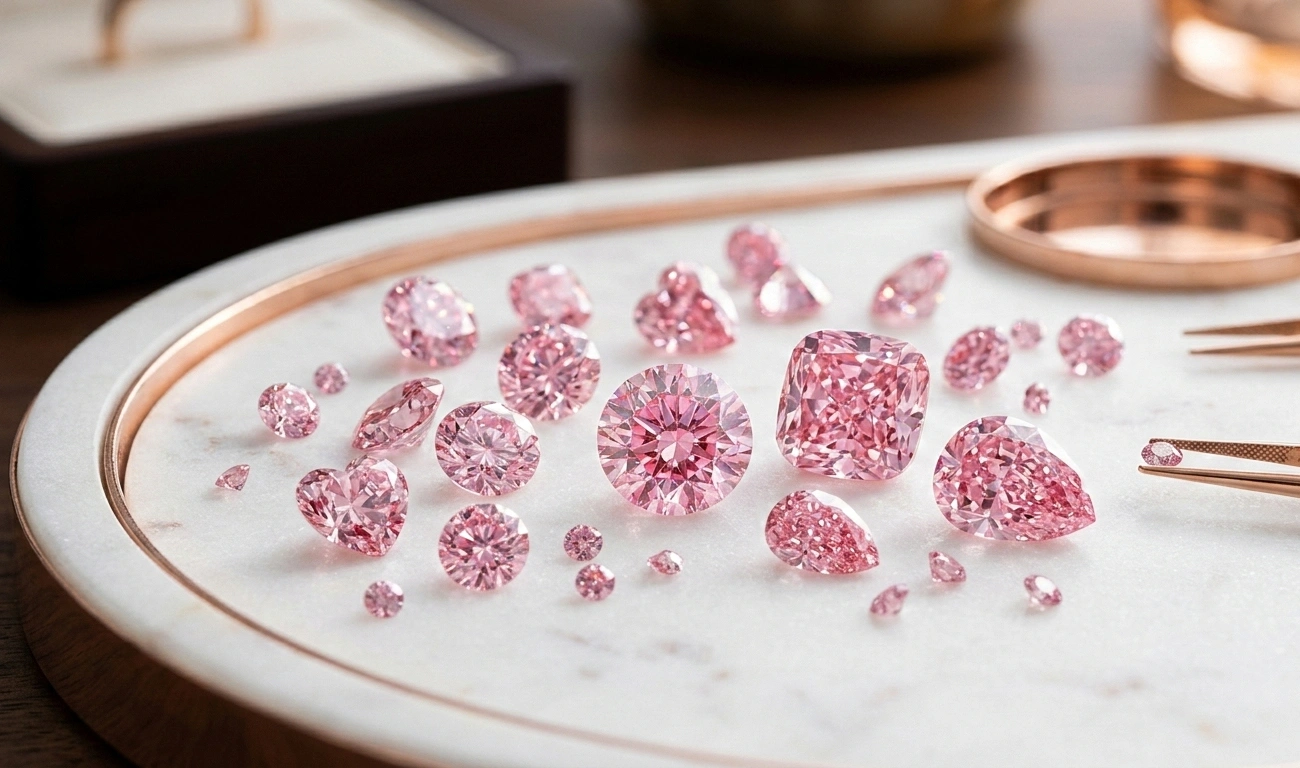
Diamonds have captivated people for centuries, but not all diamonds are created equal. While many come from large commercial mines that produce thousands of stones each year, the world’s rarest diamonds originate from only a handful of unique geological deposits. These deposits produce diamonds that are exceptionally scarce due to unusual geological conditions, limited supply, and distinctive colours or qualities.
For collectors, investors and jewellery enthusiasts alike, understanding where rare diamonds come from adds a fascinating dimension to their beauty and value. Some deposits are famous for producing intensely coloured diamonds, while others yield stones of extraordinary size or clarity. Many of these mines are now exhausted or nearing the end of their lifespan, which further increases the rarity and desirability of their diamonds.
In this article, we explore some of the rarest diamond deposits in the world and what makes them so extraordinary.
What Makes a Diamond Deposit Rare?
Before exploring specific locations, it helps to understand what actually makes a diamond deposit rare. Not every mine that produces diamonds is considered exceptional.
Several factors determine rarity.
Unique Geological Formation
Diamonds form deep within the Earth under immense heat and pressure. However, certain geological environments create diamonds with unique characteristics such as intense colour or unusual crystal structures.
These rare formations may occur only in specific parts of the world, which means the diamonds produced there can never truly be replicated elsewhere.
Limited Production
Some mines produce only small quantities of diamonds, often with a high proportion of rare stones. Others may produce diamonds for only a short period before the deposit becomes depleted.
Once a mine closes, the supply of diamonds from that location becomes permanently limited.
Distinctive Diamond Colours
Natural fancy coloured diamonds are extremely rare. Certain deposits are known for producing specific colours, such as pink, blue or green diamonds.
These coloured diamonds often command significantly higher prices than colourless diamonds because of their scarcity.
The Argyle Diamond Mine, Australia
Perhaps the most famous rare diamond deposit in the world is the Argyle Diamond Mine in Western Australia.
The World’s Primary Source of Pink Diamonds
Argyle was responsible for producing more than 90 percent of the world’s natural pink diamonds during its operation. These diamonds are among the rarest and most valuable gemstones ever discovered.
Pink diamonds from Argyle are known for their intense colour saturation, often displaying shades of pink, purple pink and red.
Unlike many coloured diamonds that gain their hue from trace elements, Argyle pink diamonds derive their colour from a distortion in the crystal lattice during formation. This unusual geological process is not fully understood, which makes these diamonds even more fascinating.
Closure of the Mine
The Argyle Mine ceased operations in 2020 after nearly four decades of production.
Since then, the supply of Argyle pink diamonds has become finite. With no new stones entering the market, existing Argyle diamonds have become highly sought after by collectors and investors worldwide.
For Australian buyers, Argyle diamonds hold particular significance because they represent a uniquely Australian natural treasure.
The Cullinan Mine, South Africa
South Africa has long been associated with historic diamond discoveries, and the Cullinan Mine remains one of the most important deposits in the world.
Source of the Largest Diamonds Ever Found
The Cullinan Mine gained global fame in 1905 when the Cullinan Diamond was discovered there. At 3,106 carats in its rough form, it remains the largest gem-quality diamond ever found.
The stone was later cut into several large diamonds, including the Cullinan I and Cullinan II, which are part of the British Crown Jewels.
Rare Blue Diamonds
Cullinan is also famous for producing some of the world’s most spectacular blue diamonds.
These diamonds obtain their colour from trace amounts of boron within the crystal structure. Natural blue diamonds are extremely rare, and Cullinan remains one of the few mines capable of producing them consistently.
The exceptional clarity and colour of these diamonds make them some of the most valuable gemstones ever sold at auction.
The Golconda Region, India
Long before modern diamond mining began, India was the world’s original source of diamonds. The Golconda region in southern India produced some of the most famous diamonds in history.
Legendary Historical Diamonds
Golconda diamonds are known for their exceptional purity and transparency. Many of the most famous diamonds ever discovered originated here, including:
- The Koh-i-Noor
- The Hope Diamond
- The Regent Diamond
These diamonds are renowned for their extraordinary clarity and brilliance.
Type IIa Diamonds
Most Golconda diamonds belong to a rare classification known as Type IIa diamonds. These diamonds contain almost no nitrogen impurities, making them chemically purer than most other diamonds.
Type IIa diamonds represent less than two percent of all diamonds mined worldwide, which makes them exceptionally rare and valuable.
Although the original Golconda mines are no longer active, the legendary diamonds from this region remain some of the most prized in existence.
The Orapa and Jwaneng Mines, Botswana
Botswana is one of the world’s leading diamond-producing countries, and two of its mines stand out for their exceptional diamonds.
Jwaneng Mine
Often referred to as the richest diamond mine in the world by value, the Jwaneng Mine produces a remarkable number of high-quality diamonds.
While the mine produces a wide range of stones, it is particularly known for exceptional gem-quality diamonds with excellent clarity and colour.
Orapa Mine
The nearby Orapa Mine is one of the largest diamond mines by surface area.
Together, these mines produce a significant portion of the world’s premium diamonds. Although their output is larger than some rare deposits, the consistent production of high-quality stones still makes them globally important sources of exceptional diamonds.
The Mir Mine, Russia
Russia is currently one of the world’s largest diamond producers, and the Mir Mine in Siberia is one of its most famous deposits.
One of the Largest Diamond Pipes Ever Discovered
The Mir Mine, also known as Mirny Mine, is a massive open-pit mine that once dominated the Siberian landscape.
Discovered in the 1950s, the deposit quickly became one of the most productive diamond mines in the Soviet Union.
At its peak, the mine produced millions of carats annually.
Unique Arctic Mining Conditions
Mining diamonds in Siberia presents extraordinary challenges. Temperatures can drop below -40 degrees Celsius in winter, which makes extraction extremely difficult.
Despite these conditions, the Mir Mine played a crucial role in establishing Russia as a global leader in diamond production.
The Letšeng Mine, Lesotho
High in the mountains of Lesotho lies one of the most remarkable diamond deposits in the world.
Famous for Huge Diamonds
The Letšeng Mine is known for producing some of the largest high-quality diamonds ever discovered.
Although the mine produces relatively few diamonds compared with other deposits, the average value per carat is among the highest in the world.
Several diamonds exceeding 100 carats have been recovered from Letšeng, including the famous 910-carat Lesotho Legend diamond discovered in 2018.
Exceptional Quality
Letšeng diamonds are often Type IIa stones, meaning they are exceptionally pure and capable of producing spectacular brilliance once cut.
Because of their rarity and size, diamonds from Letšeng frequently achieve record prices at international auctions.
Why Rare Diamond Deposits Matter to Collectors
For collectors and investors, the origin of a diamond can significantly influence its value and desirability.
Provenance Adds Value
Diamonds from well-known deposits such as Argyle or Golconda carry historical and geological significance. This provenance often increases their collectability.
Collectors are often willing to pay a premium for diamonds that come from famous mines with limited supply.
Finite Supply
Once a mine closes, the supply of diamonds from that deposit becomes permanently limited.
The closure of the Argyle Mine is a perfect example. Since no new Argyle pink diamonds are being produced, existing stones have become even more sought after.
Unique Characteristics
Each deposit produces diamonds with distinctive traits, whether it is the pink hues of Argyle, the blue diamonds of Cullinan, or the remarkable purity of Golconda stones.
These unique characteristics cannot be reproduced elsewhere, making them highly desirable for both collectors and jewellery lovers.
The Future of Rare Diamond Discoveries
Although diamond exploration continues around the world, truly rare diamond deposits are becoming increasingly difficult to find.
Modern geological surveys have identified many potential diamond-bearing regions, but very few have produced diamonds of exceptional rarity or colour.
As existing mines become depleted, the value of rare diamonds from historic deposits is likely to continue rising.
For buyers and collectors, owning a diamond linked to one of the world’s legendary deposits represents a connection to geological history that spans billions of years.
Conclusion
The rarest diamond deposits in the world have shaped the global diamond industry and produced some of the most remarkable gemstones ever discovered.
From the pink diamonds of Australia’s Argyle Mine to the historic Golconda diamonds of India and the legendary blue diamonds of South Africa, each deposit tells a unique geological story.
For collectors, investors and jewellery enthusiasts, these rare diamonds represent more than just beauty. They embody history, rarity and the extraordinary natural forces that formed them deep within the Earth.
As the supply of diamonds from these famous deposits becomes increasingly limited, their significance and value are only expected to grow.
by Australian Diamond Brokers : February 9th 2026 Come visit our store or browse our website to find out more.