

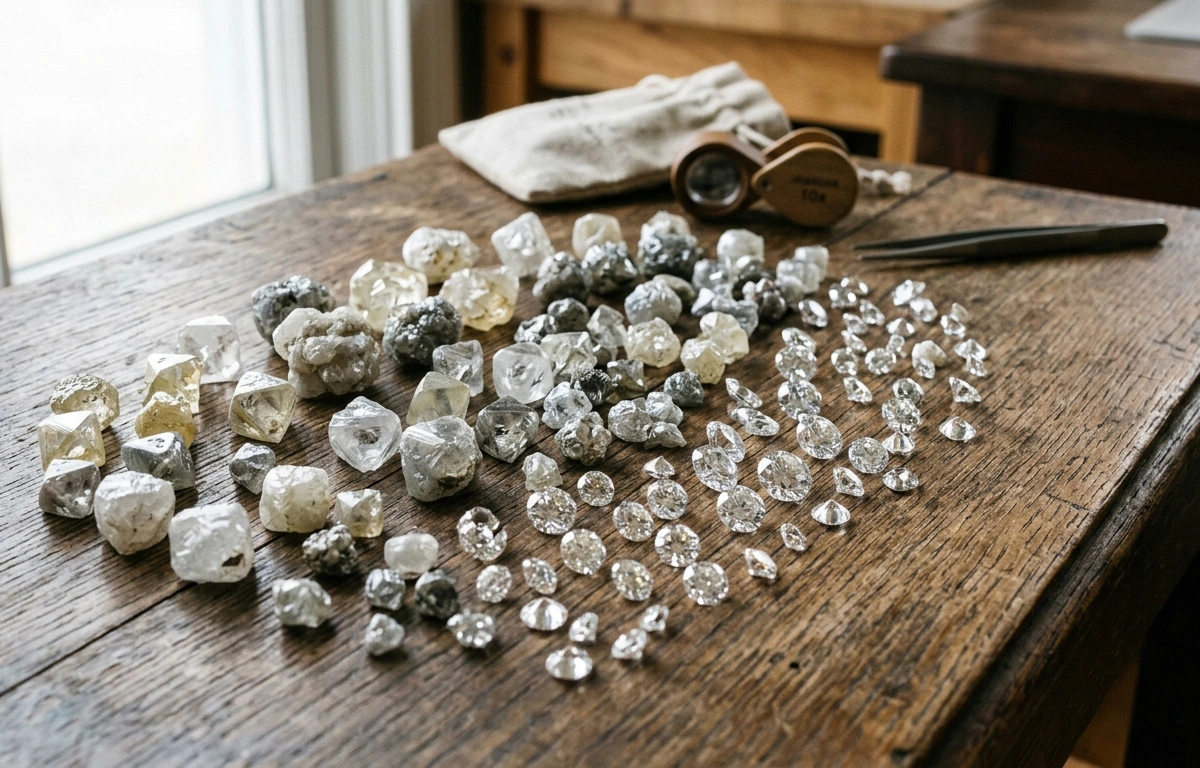
Over the past decade, the diamond industry has undergone one of its biggest shifts in history. The rise of lab-grown diamonds disrupted traditional buying behaviour, challenged pricing models, and reshaped consumer perception globally, including here in Australia.
But in 2026, a new trend is emerging. Buyers are starting to reassess their choices. Questions around long-term value, emotional significance, and rarity are coming back into focus. Many in the industry are now asking the same question:
Are buyers shifting back to natural diamonds?
The short answer is yes, but not in a simple or uniform way. The reality is more nuanced, and understanding it is key for anyone considering a diamond purchase in today’s market.
This blog explores the latest trends, what is driving buyer behaviour, and what it means for Australians looking to invest in a diamond in 2026 and beyond.
The Rise of Lab-Grown Diamonds and What Changed
A Disruptive Entry into the Market
Lab-grown diamonds gained popularity rapidly from around 2018 to 2023. Their appeal was straightforward:
- Lower upfront cost
- Larger stones for the same budget
- Ethical and environmental positioning
- Strong marketing targeting younger buyers
For many first-time buyers, especially millennials and Gen Z, lab-grown diamonds seemed like the obvious choice.
Price Compression and Market Saturation
However, one of the biggest shifts came as supply increased. Lab-grown diamonds became easier and cheaper to produce, leading to:
- Rapid price drops year after year
- Oversupply in the global market
- Reduced resale value
This is where buyer sentiment began to change.
What We Are Seeing in 2026
Alt text: Australian Diamond Brokers showroom
Img src: adb-showroom.jpg
A Shift in Buyer Awareness
Australian buyers are becoming more informed. With more data available online and through jewellers, people are starting to understand the key differences beyond just price.
In 2026, buyers are asking:
- Will this hold value over time?
- Is this something I can pass down?
- What makes this diamond unique?
These questions are naturally leading more people back toward natural diamonds.
Value Retention is Back in Focus
One of the biggest drivers of the shift is value retention.
Natural diamonds have historically:
- Maintained more stable pricing
- Held resale value better than lab-grown alternatives
- Been recognised as a finite resource
Lab-grown diamonds, on the other hand, continue to decline in price as production technology improves.
This has created a growing perception that lab-grown diamonds are more like a consumer product, while natural diamonds are closer to a long-term asset.
Emotional and Symbolic Value Matters Again
Engagement rings and milestone jewellery are not just purchases. They are emotional investments.
Buyers in 2026 are increasingly valuing:
- Rarity
- Natural origin
- Geological history
- The idea of something formed over billions of years
This storytelling aspect is something lab-grown diamonds struggle to replicate.
The Australian Market Perspective
A More Practical Buyer Mindset
Australian consumers tend to be pragmatic. While price is always a factor, there is also a strong appreciation for quality and long-term value.
What we are seeing locally:
- Buyers start with lab-grown research, then move to natural
- Increased interest in smaller, higher-quality natural stones
- More focus on certification and provenance
The Role of Education
Jewellers and diamond specialists in Australia are playing a bigger role in educating buyers.
Rather than pushing one option, many are helping customers understand:
- The long-term differences
- Market trends
- Real resale expectations
This transparency is helping natural diamonds regain trust and relevance.
Why Some Buyers Still Choose Lab-Grown
It is important to note that lab-grown diamonds are not disappearing. They still serve a clear purpose in the market.
Budget Flexibility
For buyers prioritising size over long-term value, lab-grown diamonds remain attractive.
They allow:
- Larger carat weights
- More visual impact for the price
- Entry-level access to diamond jewellery
Fashion and Non-Traditional Jewellery
Lab-grown diamonds are also popular for:
- Fashion rings
- Earrings
- Occasional jewellery
In these cases, resale value is less important, and design takes priority.
Natural Diamonds and the Return of Scarcity
Finite Supply is Becoming a Key Factor
Natural diamonds are a limited resource. Major diamond mines are:
- Producing less than in previous decades
- Reaching maturity or closure
- Not being replaced at the same rate
A well-known example in Australia is the closure of the Argyle mine, which significantly impacted the supply of rare pink diamonds.
Increased Interest in Rare Stones
This has led to growing demand for:
- High-quality white diamonds
- Fancy coloured diamonds
- Unique or investment-grade stones
Buyers are beginning to view natural diamonds not just as jewellery, but as something collectible.
Pricing Trends in 2026
Natural Diamonds
- Prices remain relatively stable overall
- Premium stones are increasing in value
- Demand is strengthening for certified, high-quality diamonds
Lab Grown Diamonds
- Continued price decline
- Increasing availability across all sizes
- Limited resale market
This widening gap is reinforcing the perception difference between the two categories.
What This Means for Engagement Ring Buyers
A More Balanced Decision-Making Process
In 2026, buyers are no longer choosing based purely on price.
Instead, they are weighing:
- Short-term budget
- Long-term value
- Emotional significance
- Personal priorities
The Rise of “Smarter Buying”
Many Australians are now choosing:
- Slightly smaller natural diamonds with better quality
- Stones with strong certification, such as GIA
- Timeless designs that retain appeal over decades
This shift reflects a more informed and intentional buyer.
The Influence of Social Media and AI
Changing Narratives
Social media and AI-driven search platforms are playing a role in shaping perception.
Buyers are now exposed to:
- Real comparisons between natural and lab-grown diamonds
- Expert insights from gemologists
- Long-term ownership considerations
AIO and Search Trends
AI-driven search results are increasingly favouring:
- Educational content
- Transparent comparisons
- Trustworthy sources
This is helping buyers make more informed decisions, which often leads them back to natural diamonds once they understand the full picture.
Is This a Permanent Shift?
The move back toward natural diamonds appears to be more than just a short-term trend.
However, it is not a complete reversal.
What We Expect Moving Forward
- A dual market will continue to exist
- Natural diamonds will dominate milestone purchases
- Lab-grown diamonds will remain strong in fashion segments
- Buyers will become even more educated over time
The key difference is that buyers now understand what they are choosing and why.
Final Thoughts
So, are buyers shifting back to natural diamonds in 2026?
Yes, but with greater awareness and intention than ever before.
This is not about rejecting lab-grown diamonds entirely. It is about recognising the differences and aligning those differences with personal values.
For many Australians, natural diamonds are once again becoming the preferred choice for meaningful, long-term purchases. Their rarity, history, and ability to hold value continue to set them apart.
At the same time, lab-grown diamonds still offer a place in the market for those prioritising size, budget, or design flexibility.
The most important takeaway is this:
Today’s diamond buyer is more informed, more thoughtful, and more strategic than ever before.
by Australian Diamond Brokers : March 23rd 2026 Come visit our store or browse our website to find out more.