

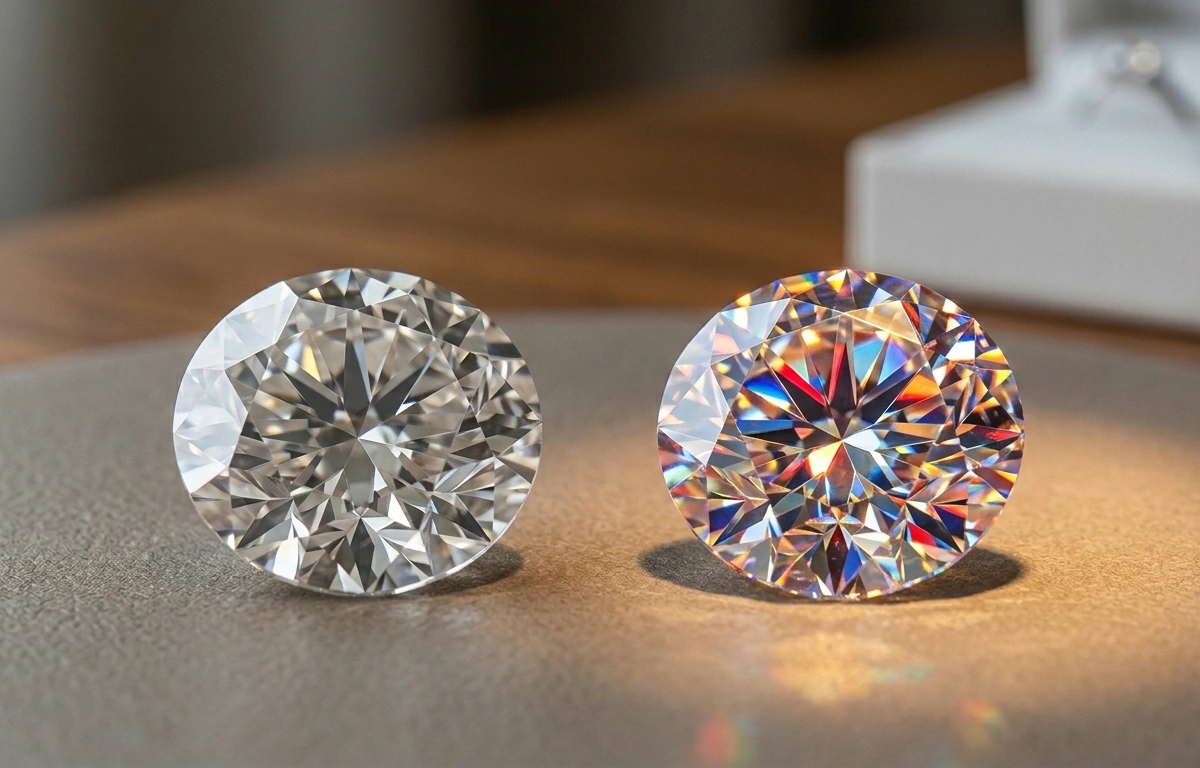
When buying a diamond, most people are taught to focus on the 4Cs: cut, colour, clarity and carat weight. These are the globally recognised grading standards used by laboratories such as GIA, and they are incredibly important when comparing stones.
However, here is something many buyers are surprised to learn. Two diamonds with identical 4Cs can look completely different in real life.
This is where true diamond expertise comes in. At Australian Diamond Brokers, we regularly help clients understand what grading reports cannot fully explain. If you rely only on the 4Cs, you may miss out on a far more beautiful diamond.
In this guide, we will explain why diamonds with the same grading can appear vastly different, and what you should really be looking for when choosing a natural diamond.
The 4Cs Are a Starting Point, Not the Full Story
The 4Cs provide a structured way to compare diamonds. They allow consistency across the global market and help buyers narrow down options.
However, grading reports are based on controlled conditions and generalised criteria. They do not fully capture how a diamond performs in everyday lighting or how it interacts with the human eye.
Two diamonds can share the same:
- Carat weight
- Colour grade
- Clarity grade
- Cut grade
Yet still differ dramatically in brilliance, sparkle and overall visual appeal.
So what causes this?
Cut Grade vs Light Performance
Why “Excellent Cut” Does Not Always Mean Exceptional
Cut is often considered the most important of the 4Cs, and rightly so. It has the biggest impact on how a diamond reflects light.
However, here is the key point. A diamond graded as “Excellent Cut” falls within a range of acceptable proportions. That range is broader than most people realise.
Within that range, two diamonds can behave very differently.
The Role of Light Return
Light performance refers to how effectively a diamond:
- Reflects light back to the viewer
- Disperses light into rainbow flashes
- Handles contrast and scintillation
Some diamonds maximise brightness and fire, while others leak light through the bottom or sides.
Even though both may be graded as Excellent, one may appear lively and brilliant, while the other looks flat or dull.
This is why professional diamond selection often involves tools like:
- ASET or Ideal Scope imaging
- Direct visual comparison under different lighting conditions
Proportions and Angles Matter More Than You Think
Subtle Differences, Big Visual Impact
Every diamond is cut with a combination of angles and proportions, including:
- Table percentage
- Depth percentage
- Crown angle
- Pavilion angle
Even slight variations in these measurements can significantly affect how light travels through the stone.
For example:
- A pavilion that is slightly too deep can cause light leakage
- A shallow crown may reduce fire and sparkle
- A large table can make a diamond appear glassy rather than lively
These nuances are not always obvious from a grading report alone.
Why Experts Look Beyond the Certificate
At Australian Diamond Brokers, we analyse these finer details to ensure the diamond performs beautifully in real-world conditions, not just on paper.
Diamond Shape and Faceting Style
Not All Brilliant Cuts Are Equal
Even within the same shape, such as round brilliant diamonds, there can be differences in faceting precision.
Some diamonds are cut with perfect symmetry and alignment, while others may technically meet grading standards but lack precision at a microscopic level.
This affects:
- How evenly is the light distributed
- The sharpness of sparkle
- The overall visual balance
Fancy Shapes Vary Even More
If you are looking at oval, pear, emerald or cushion cuts, the variation becomes even greater.
Unlike round diamonds, many fancy shapes do not have strict standardised cut grading. Two diamonds with identical 4Cs can look completely different in shape, brilliance and presence.
Fluorescence and Its Hidden Influence
What Is Fluorescence?
Fluorescence refers to how a diamond reacts under ultraviolet light. Some diamonds emit a blue glow, while others show no reaction.
How It Affects Appearance
In some cases, fluorescence can:
- Make a diamond appear slightly hazy or milky
- Improve the perceived colour in lower colour grades
- Have no visible effect at all
Two diamonds with identical 4Cs but different fluorescence levels may look noticeably different in natural sunlight.
This is often overlooked by buyers who rely solely on grading reports.
Crystal Structure and Growth Patterns
Nature Creates Unique Diamonds
Every natural diamond forms under intense heat and pressure deep within the Earth. No two diamonds are identical at a structural level.
Even when clarity grades are the same, the type, location and nature of inclusions can vary.
Why This Matters
Two diamonds graded VS1, for example, may look very different:
- One may have inclusions hidden near the edge
- Another may have inclusions directly under the table
Even if both meet the same clarity standard, their visual impact can differ.
Additionally, internal grain patterns can influence how light travels through the diamond, subtly affecting its brilliance.
Polish and Symmetry Nuances
The Details That Elevate a Diamond
Polish and symmetry are often graded separately from cut, but they play an important role in the final appearance.
- Polish refers to how smooth the diamond’s surface is
- Symmetry refers to how precisely the facets are aligned
Even within top grades, there can be differences that impact how crisp and clean the diamond looks.
A diamond with superior finishing may appear sharper, brighter and more refined.
Lighting Conditions Change Everything
Diamonds Behave Differently in Different Environments
A diamond that looks stunning under jewellery store lighting may not perform the same in:
- Daylight
- Office lighting
- Evening indoor settings
Some diamonds are optimised for bright spot lighting, while others perform beautifully across a wider range of conditions.
This is why it is so important to view diamonds in multiple lighting environments before making a decision.
The Importance of Human Visual Perception
Your Eye Is the Final Judge
Diamond grading is scientific, but beauty is ultimately visual.
The human eye is highly sensitive to:
- Contrast patterns
- Sparkle movement
- Brightness consistency
Two diamonds with identical 4Cs may trigger very different visual responses.
This is why experienced diamond specialists rely on both technical analysis and visual assessment when selecting stones.
Why This Matters for Buyers
Avoid Overpaying for Paper Value
If you rely only on the 4Cs, you may end up:
- Paying a premium for a diamond that looks average
- Overlooking a better-performing diamond with the same grading
The Value of Professional Guidance
At Australian Diamond Brokers, we source diamonds based on performance, not just certification.
We carefully assess:
- Light return and brilliance
- Proportions and angles
- Overall visual appeal
This ensures our clients receive diamonds that truly stand out, not just on paper, but in real life.
How to Choose a Better Diamond
Look Beyond the Certificate
Always treat the grading report as a starting point, not the final decision-making tool.
Ask for Visual Comparisons
Where possible, compare diamonds side by side. Differences become obvious when viewed together.
Work With Specialists
An experienced diamond broker can help you identify high-performing diamonds within your budget, often uncovering stones that outperform their grading.
Final Thoughts
The 4Cs are essential, but they do not tell the whole story.
Two diamonds with identical grades can look completely different due to factors such as light performance, proportions, fluorescence and finishing.
Understanding these differences is what separates an average diamond from an exceptional one.
If you want a diamond that truly stands out, it is worth going beyond the 4Cs and focusing on how the diamond actually looks and performs.
FAQs
Can two diamonds with the same 4Cs really look different?
Yes. The 4Cs provide a general grading framework, but they do not fully capture light performance, proportions or visual appeal. Two diamonds can look noticeably different despite identical grades.
What is more important than the 4Cs?
Light performance is often the most important factor. How a diamond reflects and disperses light has the biggest impact on its beauty.
Is an Excellent cut always the best choice?
Not necessarily. Excellent cut covers a range of proportions. Some diamonds within this category perform far better than others.
Does fluorescence affect a diamond’s appearance?
It can. In some cases, fluorescence may make a diamond appear hazy, while in others it can improve perceived colour. Each diamond should be assessed individually.
How can I ensure I choose a high-quality diamond?
Work with a trusted diamond specialist who evaluates both technical grading and visual performance. This ensures you get the best possible diamond for your budget.
by Australian Diamond Brokers : March 9th 2026 Come visit our store or browse our website to find out more.